Tree Pruning in Denver & Colorado's Front Range
Targeted pruning for structure, airflow, and long-term tree health.
Professional tree pruning in Colorado typically costs $250–$1,200 per tree depending on size, species, and the scope of work involved. Pruning is more precise than general trimming — it targets specific branches to improve a tree's structure, reduce risk, and promote healthy growth over time. Alpenglow Tree Care provides tree pruning across Denver, the Northern Metro, the Front Range Foothills, and Colorado's High Country.
Alpenglow Tree Care LLC is a licensed and insured tree service company based in Broomfield, Colorado. We prune per ANSI A300 standards — the industry specifications for proper tree care. That means correct cut placement, appropriate branch selection, and no unnecessary damage to the tree.
What Makes Pruning Different from Trimming?
Trimming is about maintenance — clearing branches for safety and appearance. Pruning goes deeper. It's about the tree's biology and long-term structure.
When we prune, we're making decisions about which branches stay and which go based on how the tree grows. We look at branch attachment points, weight distribution, co-dominant stems, and future growth patterns. The goal is to build a stronger tree that can handle Colorado's wind, snow, and ice loads.
Bad pruning — topping, lion-tailing, flush cuts — causes more damage than no pruning at all. We follow ANSI A300 standards for every cut, which means proper branch collar cuts and never removing more than the tree can handle in one session.
Types of Pruning We Perform
Structural Pruning
Training young trees to develop strong branch architecture. Removes competing leaders, corrects weak attachments, and establishes good scaffold branches early — before problems become expensive.
Crown Thinning
Selectively removing interior branches to improve airflow and reduce wind resistance. Reduces the risk of storm damage without changing the tree's overall shape.
Weight Reduction
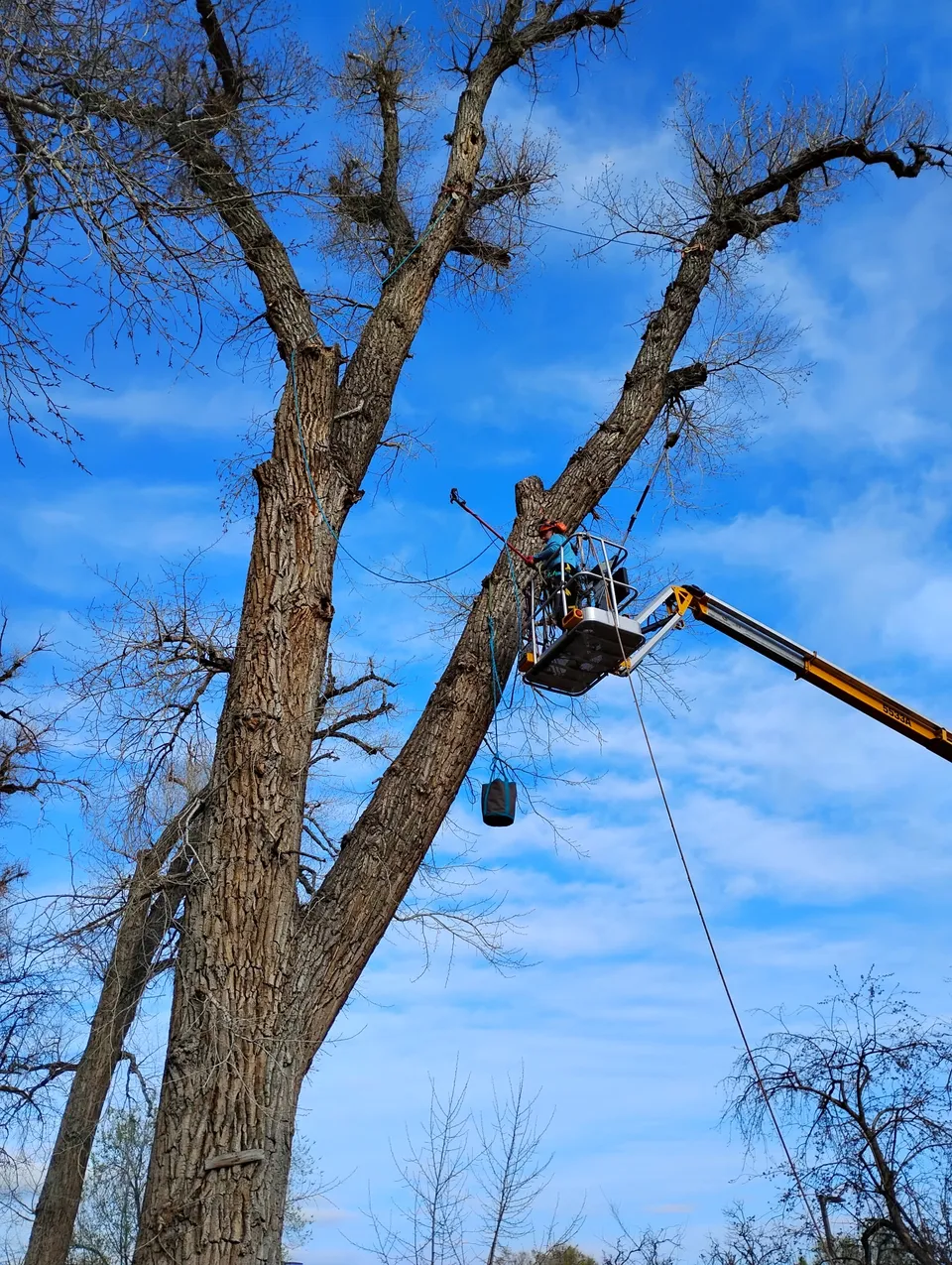
Shortening heavy, extended branches to reduce leverage and prevent breakage. Common for mature cottonwoods and elms that develop long, heavy limbs.
Health Pruning
Removing dead, diseased, or rubbing branches that invite decay and insect damage. Opens the canopy for better light and air circulation.
When Should Trees Be Pruned in Colorado?
Most pruning is best done in late winter while the tree is dormant — typically February through early April along the Front Range. You can see the branch structure clearly without leaves, and the tree heals faster heading into the growing season.
There are exceptions. Dead branch removal can happen any time. Fruit trees have their own timing depending on species. And some trees, like elms and oaks, should only be pruned during dormancy to avoid disease transmission.
Young trees benefit most from early structural pruning. It's far cheaper to shape a tree when it's 10 feet tall than to fix structural problems when it's 40 feet tall and leaning over your garage.
How much does tree pruning cost in Denver?
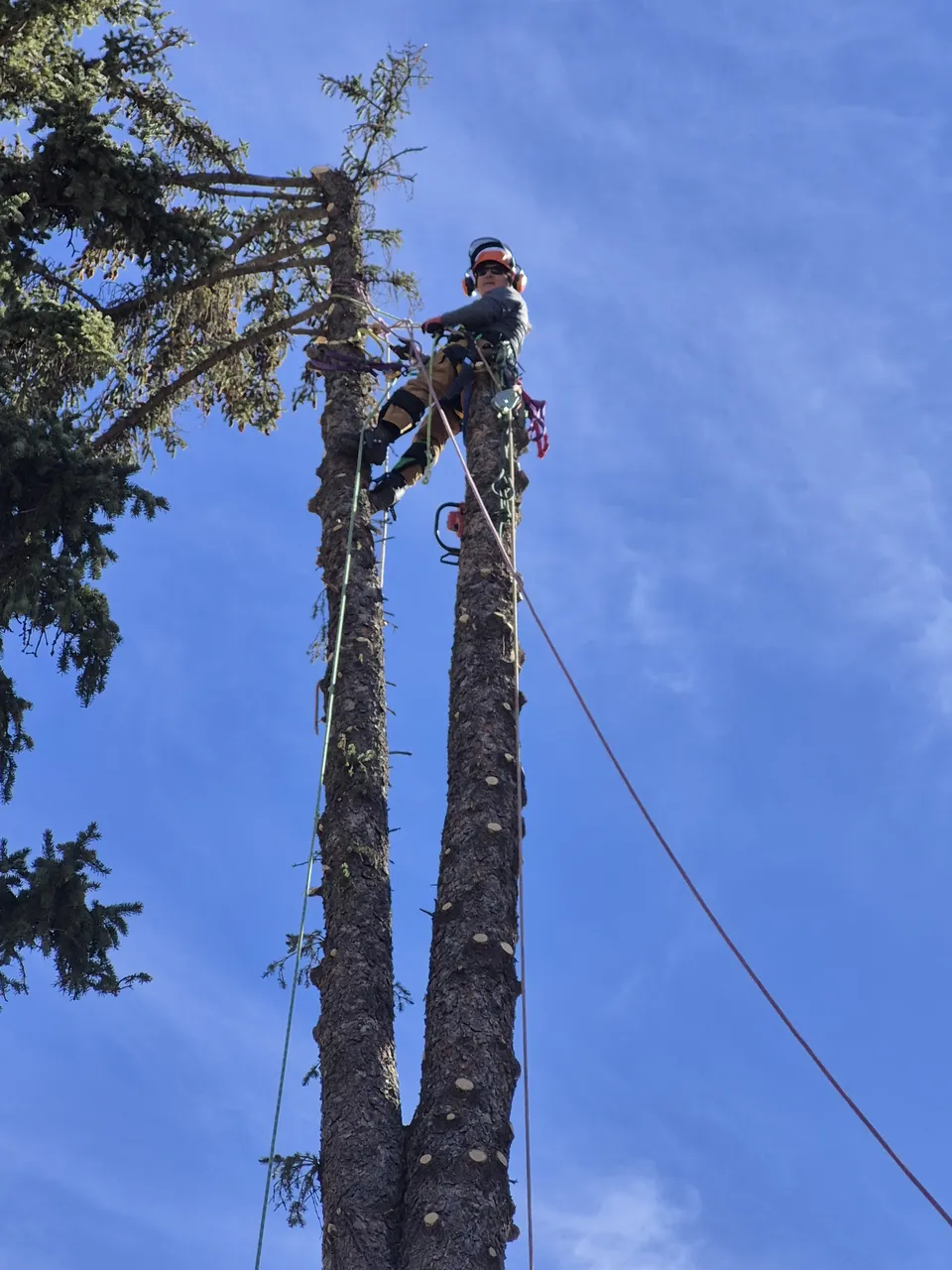
Most residential pruning jobs in the Denver metro cost $250–$1,200 per tree. Structural pruning on young trees is on the lower end. Mature tree work requiring climbing or aerial lifts costs more. We provide free on-site estimates with a clear scope of what we'll prune and why.
How often should trees be pruned?
Young trees should be pruned every 2–3 years to establish good structure. Mature trees typically need pruning every 3–7 years depending on species and growth rate. Fast-growing species like cottonwoods and silver maples need more frequent attention.
Tree Pruning FAQ
ANSI A300 is the industry standard for tree care practices in the United States. It specifies proper pruning techniques including cut placement, maximum canopy removal, and branch selection criteria. Following these standards ensures pruning helps the tree rather than harming it.
Yes. Fruit trees along the Front Range benefit from annual pruning to maintain production and prevent disease. Apple trees are best pruned in late winter. Cherry and peach trees should be pruned after the last hard frost. We'll recommend the right timing for your specific trees.
Related Services
Last Updated: August 2026